
Business planning guide
Machine Shop Plan: Which Batch Earns More per Bottleneck Hour?
Choose manufacturing work using complete job contribution per constrained hour and acceptance cash.

On this page
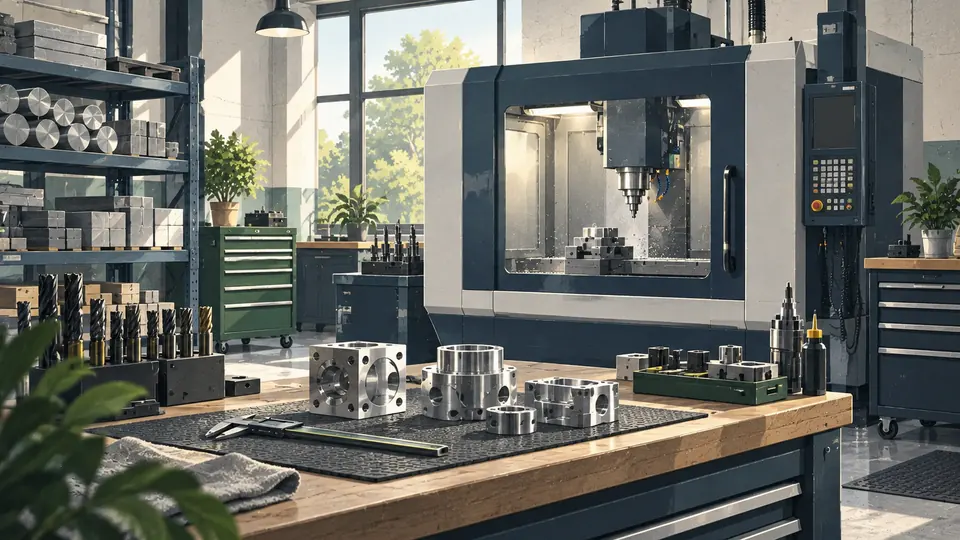
Compare jobs after their own setup and processing costs, over the same constrained machine or specialist resource. A large repeat batch can produce more revenue yet earn less per occupied hour than another accepted job.
Include job setup before ranking the quote
Original assumptions, $ per job. Twenty-two bottleneck hours are available. Repeat job A has 100 accepted parts at $40, $22 variable cost per part and $1,500 batch-fixed setup/other costs. It uses two setup hours plus ten processing/inspection minutes per accepted part. Prototype job B has ten parts at $150, $60 variable cost and $400 job-fixed costs; it needs six setup hours plus one processing hour per part.
| Measure | Repeat A | Prototype B |
|---|---|---|
| Revenue | 4,000 | 1,500 |
| Variable plus job-fixed costs | 3,700 | 1,000 |
| Job contribution before company overhead | 300 | 500 |
| Bottleneck hours | 18.67 | 16 |
| Job contribution per bottleneck hour | 16.07 | 31.25 |
B contributes more with less bottleneck time under these assumptions. That ranking does not create demand or make the two specifications interchangeable. Both together need 34.67 hours, beyond 22; using each job's positive margin does not make both deliverable.
Scrap and acceptance use time before collection
The stated variable costs include their assumed scrap allowance. Cost rework and rejected output separately if evidence changes that allowance; do not count produced parts as accepted billable units automatically. Check tooling, operator and downstream inspection capacity alongside the named bottleneck.
If all selected job costs are paid before customer acceptance and collection on day 30, A needs $3,700 and B $1,000 before their receipts. Add standing overhead, machine finance and other work to find company funding. A positive job contribution is not the cash already available for materials.
Reconcile the lot from production to customer cash
Keep the customer order, parts started, acceptable parts completed, accepted parts shipped and paid invoice units on separate rows for each lot. A part awaiting inspection can occupy material and machine time without yet satisfying the agreed billing condition. Reconcile scrapped and reworked units to the same lot so that neither cost nor an eventual sale is counted twice.
Use the signed specification to identify the acceptance test, who approves it and the event permitting an invoice. Put the material payment, tooling, processing, inspection and expected collection date on one job card. The difference between paid job costs and receipts is the cash exposure; it is not automatically an accounting work-in-progress value.
Review actual accepted contribution per bottleneck hour beside the hours still required for committed work. A revised material yield or another inspection pass should change the remaining cost and delivery calendar before the next quote is accepted.
Use signed specifications, timed routings, material ownership and acceptance terms. The selected Machine Shop Financial Model is the seller's Small Batch Manufacturing Service model. Its advertised produced-equals-shipped revenue basis needs a separate acceptance/work-in-progress bridge where the shop's contracts require one.
Scope & limitations
Original feasible-routing comparison, not technical capability or price benchmarks. Both job types require qualified routing, quality and customer-scope review.
Explore available financial tools